Common problems with access for rubbish collection Hemel Hempstead
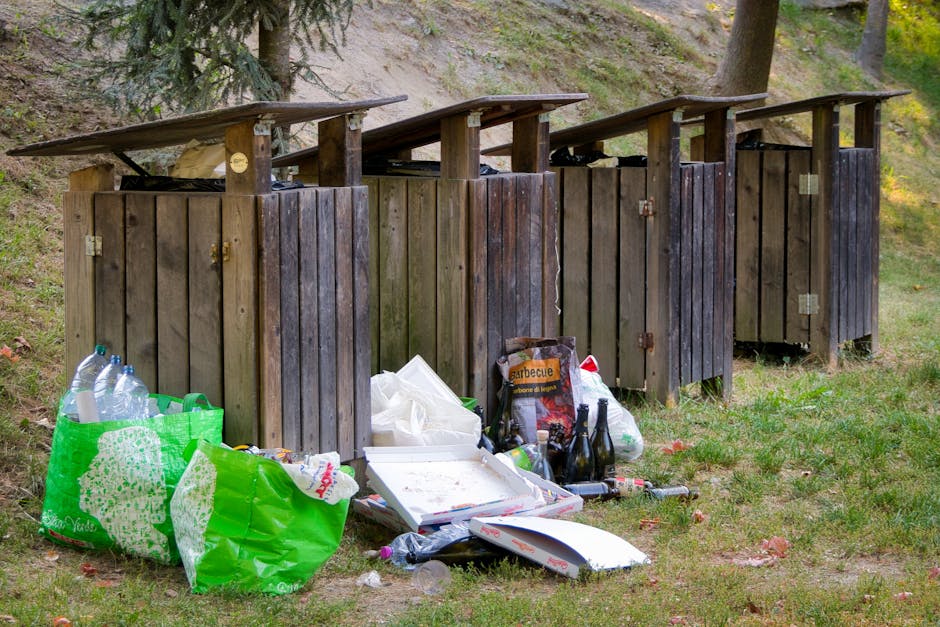
If you have ever tried to arrange a rubbish collection and then realised the skip, van, or crew may not actually be able to reach the waste, you already know how quickly a simple job can become a headache. Common problems with access for rubbish collection Hemel Hempstead are usually not about the rubbish itself. They are about the route to it: narrow drives, awkward stairwells, parked cars, low branches, tight turning circles, shared entrances, and the general reality of older homes, flats, and busy streets.
That matters because access issues can affect timing, labour, safety, and even whether a collection can happen at all. In this guide, we'll break down the typical access problems people run into in Hemel Hempstead, why they matter, how rubbish collection usually works around them, and what you can do to make the process smoother. No fluff. Just practical, real-world advice that helps you avoid an awkward "well... we can't get the van in there" moment.
Why Common problems with access for rubbish collection Hemel Hempstead Matters
Access is one of those things people tend to underestimate until collection day. If a property is difficult to reach, the knock-on effects are immediate: longer loading times, extra handling, more risk of damage, and sometimes a wasted visit. Truth be told, that can be annoying for everyone involved.
In Hemel Hempstead, you see a mix of property types. There are houses with narrow side returns, flats with communal entrances, maisonettes with stairs, business premises with rear yards, and newer developments where parking restrictions are tight. Each brings its own little twist. A collection that looks straightforward from the street may become much less straightforward once the crew checks the actual access route.
The problem is not just inconvenience. Poor access can create safety issues too. Heavy items may need to be carried further. Crews may have to navigate slippery paths, low-light hallways, loose gravel, or steep steps. If the route is cramped, people can trip, scrape walls, or strain themselves. Nobody wants that. It is messy, avoidable, and very often predictable.
For households and businesses, access matters for another reason: it affects the quote and the schedule. If a team expects a simple curbside load but finds a fourth-floor flat with no lift, the job may take longer than planned. That does not mean the collection cannot happen. It just means the plan needs to reflect the reality on the ground.
Expert takeaway: the best rubbish collections are usually the ones where access has been thought through before the van arrives. A few minutes of planning can save a lot of time, stress, and back-and-forth later on.
For broader clearances, it can help to look at related services such as house clearance, flat clearance, or general waste removal, especially if the access issue is tied to the size or layout of the property rather than the rubbish itself.
How Common problems with access for rubbish collection Hemel Hempstead Works
In practice, rubbish collection teams usually assess access in one of three ways: from the information you provide, from photos or a site visit, or from the collection itself when the crew arrives. The more accurate the information, the smoother the job. Simple enough, but you'd be surprised how often a "yes, access is fine" turns into a van parked two streets away and a long carry.
The collection process normally looks like this:
- You describe what needs removing and where it is located.
- The provider checks access concerns such as stairs, distance from the vehicle, gates, parking, or restricted entry.
- A plan is made for loading, lifting, and vehicle positioning.
- The crew arrives and confirms the actual route and working area.
- The waste is removed, sorted, and taken away for disposal or recycling.
If access is easy, the job may be quick and neat. If access is awkward, the team may need extra time, extra hands, or alternative equipment. For example, a garage clearance can often be direct and simple, while a loft clearance may involve steep stairs, low head height, and careful carrying. The same goes for a garden clearance where the waste is at the end of a long muddy path after a wet morning. Not ideal.
Common access problems include:
- narrow driveways or lanes
- low bridges, gates, or branches limiting vehicle access
- double-yellow lines, permit zones, or limited stopping space
- shared entrances in blocks of flats
- stairs with no lift
- long carrying distances from the item to the vehicle
- locked communal doors or restricted building access
- soft ground, uneven paving, or slippery surfaces
- heavy, bulky, or awkward items that need two-person lifting
There is also a difference between vehicle access and pedestrian access. A van may be able to park nearby, but if the path to the waste is cluttered with bins, bikes, prams, or plant pots, the collection is still slowed down. Small thing, big effect.
Key Benefits and Practical Advantages
Getting access right does more than prevent problems. It actually improves the whole collection experience. That is the part people often miss.
- More accurate quotes: when access details are clear, pricing can be based on the real job rather than guesswork.
- Faster collections: less time spent circling the block, waiting at gates, or carrying waste long distances.
- Lower risk of damage: good planning protects walls, floors, stair rails, and door frames.
- Better safety: crews can move carefully when they know what to expect.
- Less disruption: neighbours, tenants, customers, and staff are disturbed less when the route is organised.
- More reliable scheduling: jobs are less likely to overrun or require a second visit.
There is a quieter benefit too: peace of mind. When you have already checked parking, gate access, and the load route, the day feels calmer. You are not standing at the window wondering whether the crew can get in. You know what is happening, and that makes a difference.
For larger or mixed waste jobs, checking related pages like builders waste clearance or business waste removal can also help you understand how access needs might change depending on the type of waste and location. A shop unit, for instance, often has a very different loading setup from a top-floor flat. No surprise there, really.
Who This Is For and When It Makes Sense
This topic matters to almost anyone arranging a rubbish collection in Hemel Hempstead, but some people feel the pain more sharply than others.
You will probably find this especially relevant if you are:
- a homeowner with limited driveway space
- a tenant in a flat or maisonette
- a landlord clearing a property between lets
- a letting agent managing a move-out
- a business owner dealing with stock, furniture, or refurbishment waste
- a builder or contractor with debris that needs collecting from a tight site
- someone clearing a garage, loft, shed, or garden with difficult access
It also makes sense to think about access before events like:
- house moves
- end-of-tenancy clearances
- renovation work
- office reshuffles
- garage or loft declutters
- garden overhauls
- furniture disposal after replacing large items
If you are dealing with bulky household items, the access issue can become even more obvious. A sofa is manageable in the right conditions; a sofa plus a tight stairwell plus a parked car outside? That is a different story. In those cases, pages such as furniture clearance and furniture disposal are useful reference points for what kinds of items often need more careful planning.
Sometimes the smartest move is simply to choose a service that suits the access rather than forcing a one-size-fits-all solution. A full household clearance is not always the right answer; sometimes a more focused collection is the cleaner route.
Step-by-Step Guidance
If you want to avoid access-related problems, follow a simple process. Nothing fancy. Just the kind of practical prep that saves time later.
1. Walk the route from the waste to the vehicle area
Do a proper walk-through, not a quick glance from the front door. Start where the waste is located and follow the exact route to where a vehicle would stop. Check gates, corners, steps, door widths, low ceilings, and anything that might snag a large item.
2. Measure obvious pinch points
You do not need to turn this into a construction survey. But if a sofa, wardrobe, fridge, or builder's bag has to pass through a narrow gap, measure it. That one small measurement can save a lot of guesswork.
3. Check parking and stopping space
Can a van stop legally and safely close enough? If not, how far is the carry? In some Hemel Hempstead streets, parking pressure is the real issue, not the path inside the property. Easy to miss, but important.
4. Think about the weight and shape of the load
Light loose waste is one thing. Large, heavy, or awkward items are another. Broken wardrobes, plasterboard, old sofas, and damp garden waste all behave differently when being carried. Shape matters as much as weight.
5. Share photos if requested
Good photos can answer a lot of questions fast. Take them in daylight if you can. Include the route, the waste, the parking area, and any gates or stairs. Slightly dull advice, maybe, but it works.
6. Prepare the access path
Move bins, bikes, plant pots, loose cables, and small trip hazards out of the way. If the route goes through a shared hallway, let neighbours know where possible. A clear path makes the day smoother for everybody.
7. Confirm building rules or permissions
If you are in a block, managed estate, or business premises, check whether you need permission to use a loading bay, service entrance, or communal area. It is much better to ask ahead than to find out when the crew is standing outside waiting.
8. Agree on the plan before collection day
The last step is the most useful: confirm the access plan, the arrival window, and any limits. If there is a time restriction, say so. If the van must use a side gate, say so. If the stairs are steep and there is no lift, say that too. Clear information beats polite confusion every time.
Expert Tips for Better Results
After enough collections, you start to see the same patterns. Here are the small things that make a big difference.
- Be specific, not "roughly okay." The phrase "access is fine" can mean very different things to different people. Better to say, "the van can park about 20 metres away" or "there are two flights of stairs and a narrow landing."
- Take the route seriously in winter. Wet leaves, frost, and muddy paths can turn easy access into awkward access fast. A route that feels manageable at midday can be slippery by 8am.
- Remove anything movable. If a small object can be shifted before the crew arrives, do it. It reduces trip hazards and speeds things up.
- Leave doors and gates easy to open. Sticky locks, padlocks without keys, and awkward coded entries waste time. That part is rarely dramatic, just frustrating.
- Match the service to the setting. A flat with no lift may need a different approach from a house with driveway access. Use the right kind of clearance for the layout.
- Ask about insurance and safety practices. A reputable provider should have sensible procedures in place. If you want reassurance, it is worth reading the site's insurance and safety information and health and safety policy.
A small human tip: if you are clearing a property that feels emotionally loaded, like a family home or a long-term office, try to do the access prep first. It gives the rest of the job a bit of structure. Sounds simple, but it helps.
Common Mistakes to Avoid
Most access problems are avoidable. Not all, but most. The usual mistakes are surprisingly ordinary.
- Assuming the crew can "just manage it." Maybe they can. But maybe not without extra time or a different vehicle setup.
- Forgetting about shared spaces. Communal hallways, stairwells, and entrances need to stay clear and respectful.
- Ignoring the parking situation. A short walk from the van can become a long carry if parking is tighter than expected.
- Not mentioning stairs or lifts. That is one of the biggest sources of surprise on the day.
- Leaving access checks until collection morning. By then, it may be too late to fix a blocked route or rearrange parking.
- Overlooking bulky items. A single oversized item can be the thing that blocks the whole route.
- Trying to squeeze in too much waste. If access is already tight, overfilling the working area makes everything slower and less safe.
One of the sneakiest issues is clutter around the collection point. People often clear the main waste but forget the "little" stuff: shoes by the door, a bike wheel, a trailing cable, a storage box, a stack of planters. Not much on its own. Together, they make the route awkward.
If the job involves lots of mixed household contents, it can be worth looking at a more structured service such as home clearance or, where needed, loft clearance. Those services often suit properties where access is part of the challenge, not just the amount of waste.
Tools, Resources and Recommendations
You do not need specialist equipment for every collection, but a few practical tools help a lot.
- Tape measure: useful for checking doorways, stairwells, and tight corners.
- Phone camera: take clear photos of the access route and the waste.
- Notes app: write down parking restrictions, gate codes, or time windows.
- Basic flashlight: handy for dark side passages, garages, and lofts.
- Gloves and sturdy shoes: sensible if you are helping move smaller items before the crew arrives.
As for service planning, think about the type of waste before you think about the vehicle. Garden waste, for example, can be bulky but lightweight. Builders' waste can be compact and very heavy. Office furniture tends to be awkward because of size. Each one changes the access plan in a slightly different way.
That is why it can help to explore service pages like garden clearance, builders waste clearance, or office clearance if your access issue is tied to the kind of rubbish you have, not just where it sits.
For customers who want to compare service styles or understand what may affect cost, the pricing and quotes page can be useful. It helps set expectations before the crew arrives, which is always a good thing.
Law, Compliance, Standards, or Best Practice
Access problems sit in a practical grey area where legal duties, safety responsibilities, and good manners all overlap. There is not usually one dramatic rule that solves everything. Instead, the expectation is simple: collections should be carried out safely, responsibly, and with reasonable planning.
In the UK, waste handling is expected to be managed carefully, with attention to safe lifting, safe movement, and responsible disposal. If a site has restricted access, that does not remove the duty to work safely. In fact, it usually increases the need for care. Tight stairs, awkward landings, and shared areas are exactly the sort of places where a rushed job can go wrong.
From a best-practice point of view, the important things are:
- clear communication before the visit
- safe manual handling
- respect for shared or communal spaces
- appropriate vehicle placement
- honest discussion of access limits
- good record-keeping where needed for business or managed properties
If you are arranging rubbish collection for a business, it is also sensible to think about staff safety, customer movement, fire exits, and loading areas. Office and commercial settings can be deceptively tricky. One parked van in the wrong place can be more disruptive than it looks.
For businesses and landlords, the site's policy pages such as terms and conditions and complaints procedure are worth reviewing so expectations are clear if access does create complications. That is plain common sense, really.
Options, Methods, or Comparison Table
Different access situations call for different approaches. Here is a simple comparison to help you think it through.
| Access situation | Best approach | Why it works | Watch out for |
|---|---|---|---|
| Driveway or road-side access | Direct loading near the property | Fast, efficient, minimal carrying | Parking restrictions or blocked entrances |
| Flat with stairs only | Plan for manual carry and extra time | Realistic preparation prevents delays | Steep staircases and tight turns |
| Communal block or estate | Confirm entry, lifts, and loading permissions | Avoids access disputes on the day | Locked doors, notices, and neighbours |
| Narrow lane or limited parking | Assess van size and stopping distance | Prevents overshooting the route plan | Long carries and traffic disruption |
| Garden, loft, or garage clearance | Prepare the path and clear obstacles | Reduces trip hazards and speeds removal | Mud, low headroom, clutter, and damp surfaces |
In some cases, the easiest option is not the biggest vehicle or the fastest-looking quote. It is the option that fits the site. That may sound obvious, but it is exactly where people come unstuck.
Case Study or Real-World Example
Here is a very typical example. A homeowner in Hemel Hempstead books a rubbish collection for old furniture and mixed household items after a clear-out. On paper, it sounds straightforward. The items are all in one place. The driveway looks usable. Job done, right?
Then the crew arrives and discovers three things: the driveway is partly blocked by a neighbour's vehicle, the side gate is narrower than expected, and one of the larger items needs to be carried down a tight staircase from the first floor. Nothing catastrophic. But what looked like a quick ground-floor collection is now a more careful move with longer loading time.
Because the access details were not discussed properly, the job takes longer than expected. The crew still completes it, but only after repositioning, extra carrying, and a bit of patience from everyone. If the access had been explained clearly in advance, the provider could have planned the route, estimated the time better, and prepared the right setup.
That is the whole lesson, really. Access problems are rarely dramatic on their own. They become costly when they are hidden.
For similar situations involving bulky items, it is worth considering whether furniture clearance or a more general waste removal service is the better fit. Sometimes the item type and the access route need to be planned together.
Practical Checklist
Use this checklist before collection day. It is simple, but it catches most issues.
- Have I checked the exact route from waste to vehicle?
- Are there stairs, narrow doors, or tight corners?
- Can a van stop legally and safely nearby?
- Have I mentioned any parking restrictions or time limits?
- Are gates, codes, or keys ready to use?
- Have I cleared bins, bikes, cables, and loose clutter?
- Do I need to warn neighbours or building management?
- Have I shared photos if the access is awkward?
- Is the route safe in wet or dark conditions?
- Have I confirmed the type and size of the waste?
If you can tick all of those off, you are in a good place. If not, fix the gaps before the van turns up. It really is worth the extra ten minutes.
Conclusion
Common problems with access for rubbish collection Hemel Hempstead are usually predictable, practical, and very fixable. Narrow entrances, parking pressure, stairs, shared hallways, long carries, and awkward layouts all slow things down, but they do not have to derail the collection.
The best results come from clear communication, a quick route check, and honest planning about what the property actually looks like on the day. That means better quotes, safer handling, less disruption, and a smoother job overall. Small prep, big payoff.
If you are weighing up a collection and want to understand how access might affect the job, reviewing the service details, safety information, and pricing guidance first can make the whole process much easier. And if you are dealing with a tricky property layout, that extra bit of thought now will probably save you a fair amount of faff later.
Get a free quote today and see how much you can save.
Frequently Asked Questions
What are the most common access problems for rubbish collection in Hemel Hempstead?
The most common issues are narrow driveways, limited parking, stairs without lifts, shared entrances, locked gates, and long carrying distances. Older properties and flats tend to create the most access surprises.
Does access affect the price of a rubbish collection?
Often, yes. If the crew has to carry waste a long way, navigate stairs, or work around restricted parking, the job may take more time and labour. That can affect the quote, so it helps to explain access clearly before booking.
Should I send photos of the access route?
If the provider asks for them, yes. Photos are one of the quickest ways to show staircases, gates, parking space, and awkward corners. A few clear images can prevent a lot of misunderstanding.
What if the van cannot park close enough?
If the van has to stop further away, the team may need to carry waste a longer distance. That can still be manageable, but it should be discussed in advance so the provider can plan properly.
Can rubbish still be collected from a flat with no lift?
Usually, yes, provided the stair access is safe and practical. The team may just need more time and may treat the job as a manual carry rather than a simple ground-floor load.
What should I do if my garden is down a narrow side path?
Clear the path as much as possible before collection day. Move tools, pots, bins, and anything else that could slow the route down. If the path is very tight, mention that early so the provider can judge whether the access is workable.
Do I need to tell the provider about shared hallways?
Yes, absolutely. Shared hallways and communal areas can affect timing, safety, and permission to move items. It is best to mention them up front, even if the route seems simple.
What happens if access is worse than expected on the day?
The crew will usually assess the site and decide whether the job can still be done safely. Sometimes they can adapt. Sometimes they may need extra time or a revised plan. Honest communication before arrival reduces the chance of a surprise.
How can I make access easier before collection day?
Clear clutter, unlock gates, move cars if possible, check the route for trip hazards, and share precise details about stairs, parking, or narrow points. Small actions here make the whole collection smoother.
Is access a bigger issue for builders' waste than household waste?
It can be. Builders' waste is often heavier and more awkward to move, so access problems become more noticeable. If your job involves renovation debris, a service like builders waste clearance may need more detailed planning than a simple household pick-up.
How do I know whether to book furniture clearance or general waste removal?
If the main items are bulky household goods such as sofas, tables, or wardrobes, furniture clearance may be the better fit. If the load is mixed and includes different waste types, general waste removal may make more sense. The access route still matters either way.
What is the best way to avoid delays on collection day?
Share accurate access details, prepare the route in advance, and confirm parking and entry arrangements before the crew arrives. It sounds basic, but that is usually what keeps everything on track.
Where can I learn more about safety and service expectations?
It is sensible to review the provider's health and safety information, insurance and safety details, and terms and conditions so you know what to expect. That helps with confidence and keeps the job straightforward.